ACAPLEX™ is a patented regenerative technology combining the KORU-ACA01 peptide with Bio-identical Type III Collagen to reinforce and protect the extracellular matrix. Designed for clinical applications, it delivers scientifically validated ECM regeneration, enzyme inhibition, and long-term structural stability.
What is ACAPLEX™?
ACAPLEX™ is a patented regenerative technology that combines the KORU-ACA01 peptide with Bio-identical Type III Collagen to reinforce, protect, and stabilise the extracellular matrix (ECM).
This advanced dual-component system is designed to address one of the primary biological drivers of skin ageing: ECM degradation and loss of structural integrity. By simultaneously stimulating ECM regeneration and inhibiting enzymatic breakdown, ACAPLEX™ supports firmer, more resilient skin architecture and long-term tissue stability.
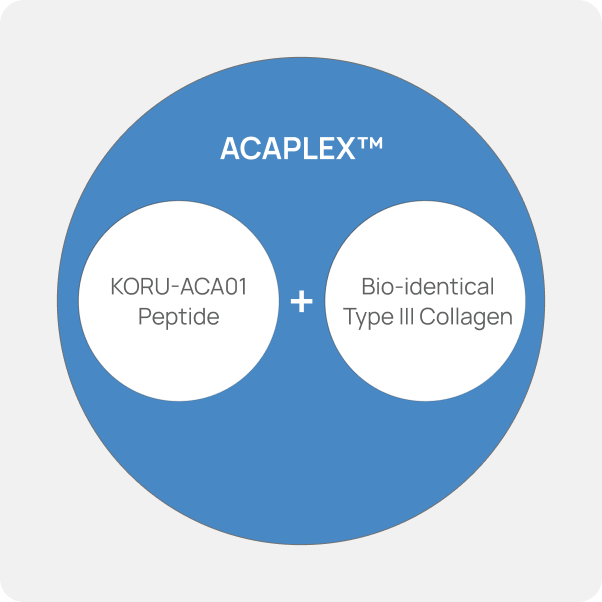
ACAPLEX™ Core Components
KORU-ACA01 Peptide
Patented ECM-Protective Signalling Peptide
KORU-ACA01 is a proprietary bioengineered peptide developed by Koru Pharma’s R&D Institute. It is designed to mimic the signalling function of the GH2 hormone, playing a critical role in maintaining ECM homeostasis.
Through targeted molecular signalling, KORU-ACA01 supports collagen preservation, reinforces dermal structure, and promotes controlled regeneration within the extracellular matrix.
Mechanism of Action
How KORU-ACA01 Reinforces and Protects the ECM
1 Stimulation of ECM Regeneration
KORU-ACA01 promotes the synthesis of essential extracellular matrix proteins, including procollagen, supporting the restoration of skin’s natural structural framework.
By enhancing ECM protein regeneration, the peptide contributes to:
Improved tissue renewal
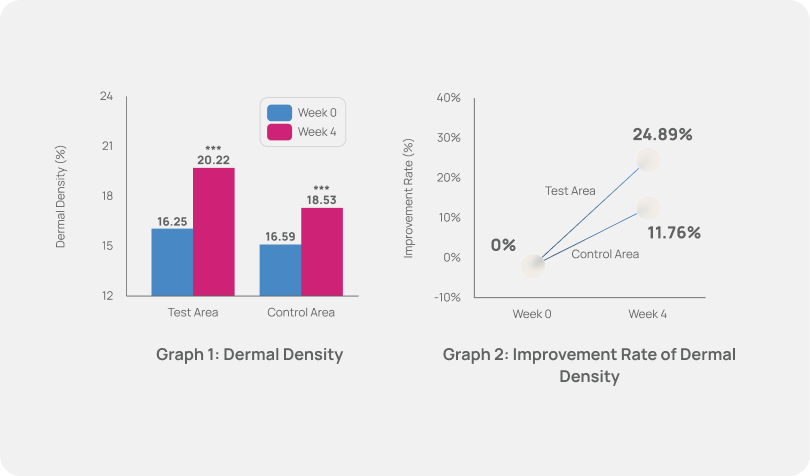
Increased dermal strength
More uniform and stable skin architecture
2 Inhibition of ECM Degradation
KORU-ACA01 inhibits key enzymes responsible for ECM breakdown, including:
Collagenase
Elastase
Matrix Metalloproteinase-1 (MMP-1)
By reducing enzymatic degradation of collagen and elastin, KORU-ACA01 helps preserve ECM integrity, slowing the structural deterioration associated with intrinsic and extrinsic ageing.
3 Long-Term ECM Stability
Through the combined stimulation of ECM protein production and suppression of ECM-degrading enzymes, KORU-ACA01 provides sustained structural support.
This dual action reinforces:
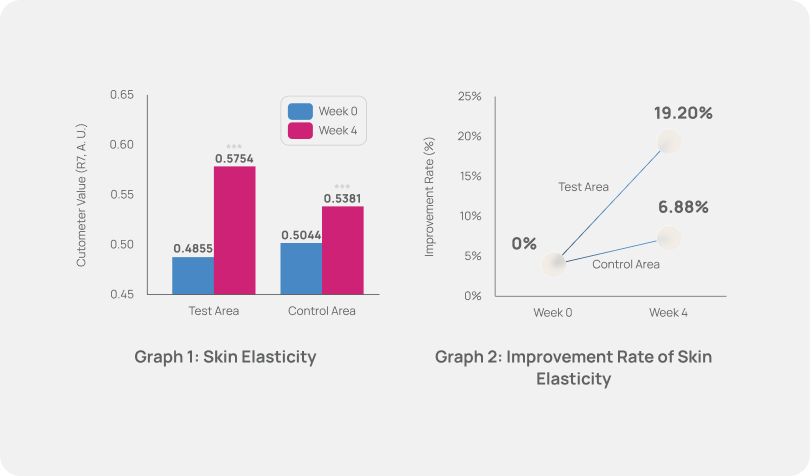
Skin elasticity
Mechanical resilience
Long-term dermal integrity
Scientific Validation & Safety Profile
Proven Skin Compatibility
KORU-ACA01 has undergone rigorous in-vitro safety evaluation to assess its effect on skin cell viability.
In-vitro cytotoxicity assay
Cell line: HS68 human dermal fibroblasts
Study designed by Koru Pharma’s R&D Institute
Conducted: September 2022
Results:
No cytotoxicity observed across all tested concentrations.
These findings indicate a minimal risk of cellular irritation or damage, supporting the peptide’s suitability for advanced aesthetic and dermatological applications, including sensitive skin conditions.
HS68 is a widely accepted human dermal fibroblast cell line used to evaluate skin viability and biocompatibility.
Superior ECM Performance
Procollagen Stimulation
In comparative in-vitro studies, KORU-ACA01 demonstrated superior stimulation of procollagen synthesis compared to established industry ingredients.
Outperformed copper peptide
Achieved higher procollagen production at half the concentration
This enhanced procollagen stimulation supports improved collagen supply, reinforcing dermal structure and skin firmness.
Enzyme Inhibition Performance
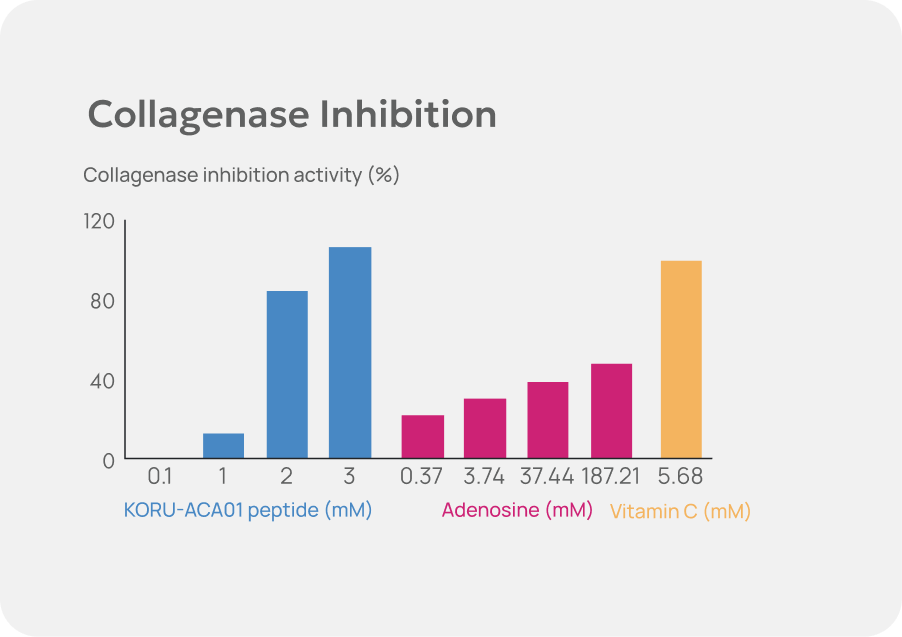
Collagenase & Elastase Inhibition
KORU-ACA01 outperformed widely used anti-ageing actives, including Vitamin C and adenosine, even at low concentrations (2 mM), significantly reducing collagen degradation.
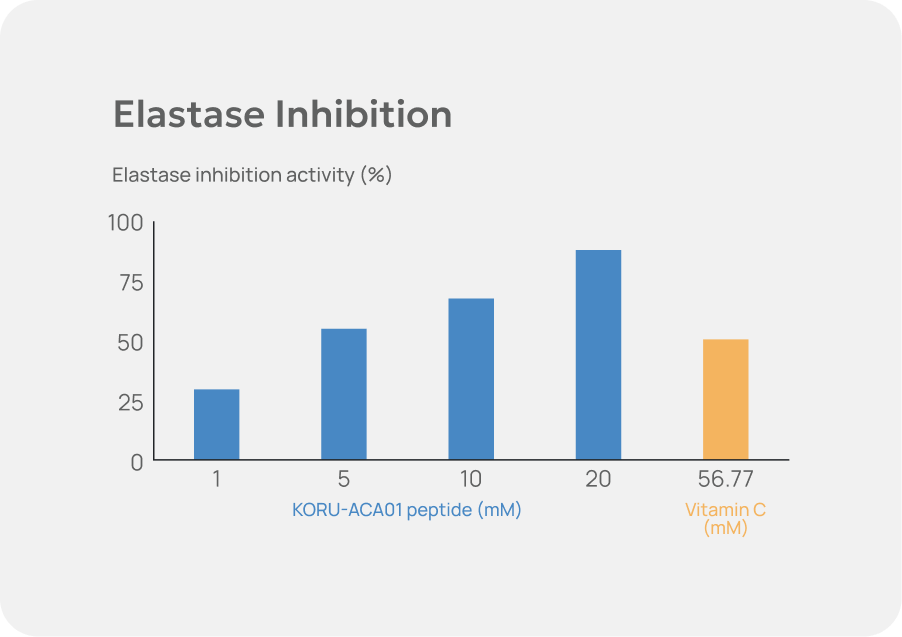
Elastase Inhibition
At a concentration of 5 mM, KORU-ACA01 demonstrated greater elastase inhibition than Vitamin C at nearly ten times the concentration (56.7 mM), supporting elastin preservation and reduced structural sagging.
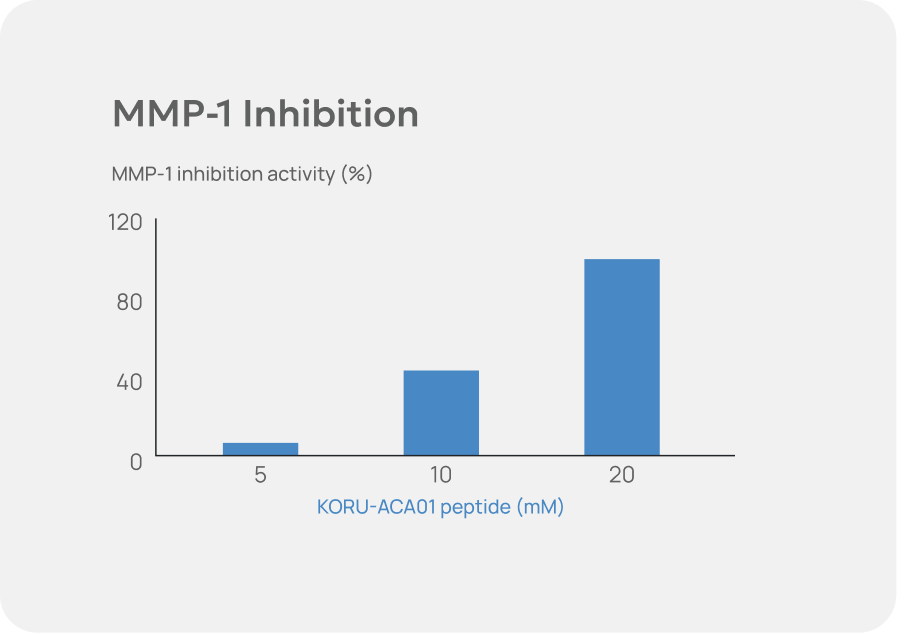
MMP-1 Suppression
As KORU-ACA01 concentration increases, inhibition of MMP-1 intensifies, effectively limiting collagen and elastin breakdown and supporting long-term ECM protection.
Bio-identical Type III Collagen
Structural Reinforcement of the Dermal Matrix
The degradation of the Type III collagen network is a critical factor in skin ageing, contributing to loss of elasticity, fine lines, and tissue laxity.
Bio-identical Type III Collagen is a bioengineered solution designed to closely mimic natural human Type III collagen, offering high purity and exceptional biocompatibility.
By integrating seamlessly within the ECM, it enhances cellular adhesion, repair, and regenerative processes.
Related products
MESOHEAL® Bio
A science-driven skin rejuvenation treatment featuring patented peptide technology, Bio-Identical Type III Collagen, and 1.5% dual molecular weight Hyaluronic Acid for deep hydration, improved elasticity, and firmer, youthful skin. Ideal for face, neck, décolleté, and hands.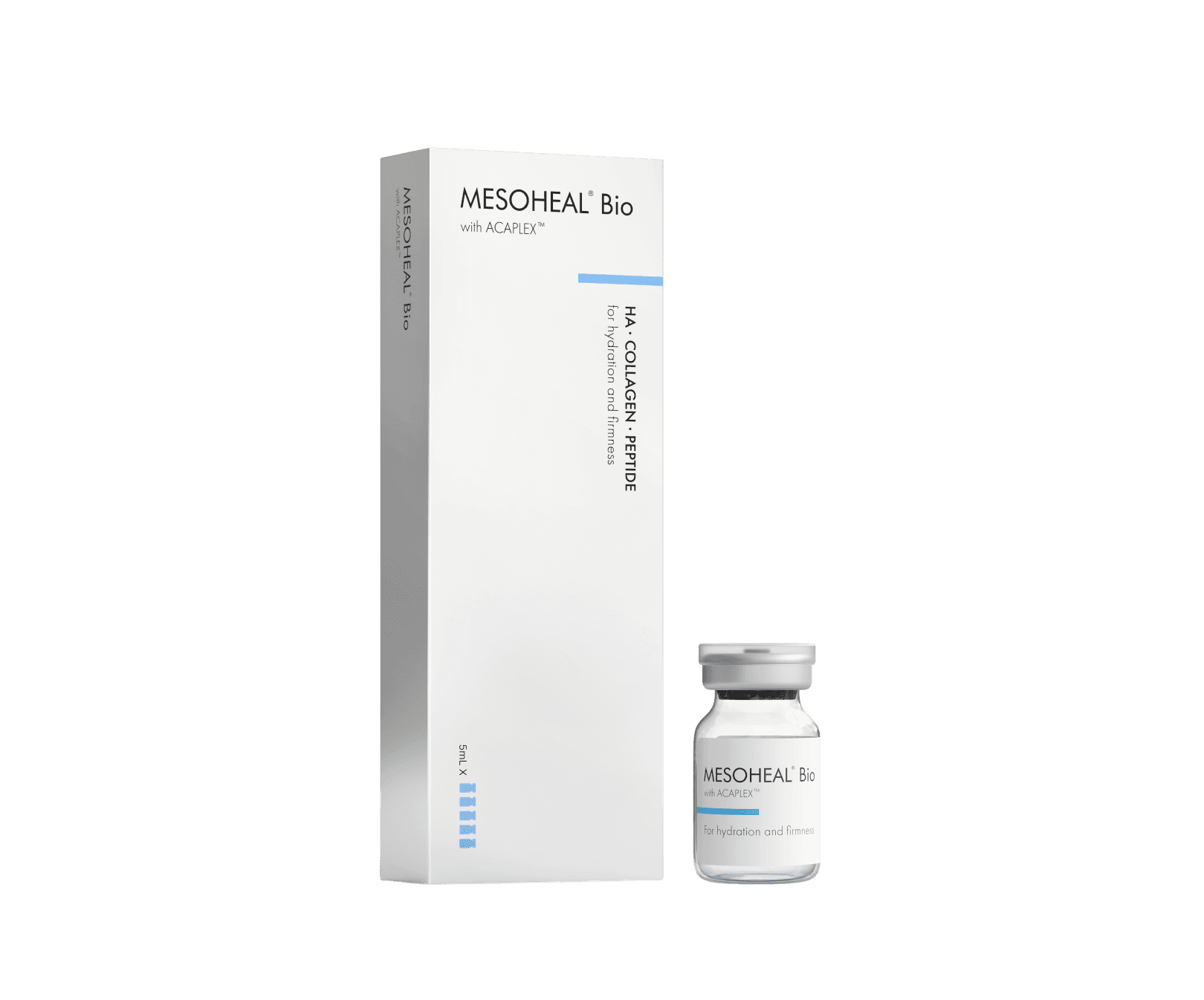
Business Inquiries
